Overview
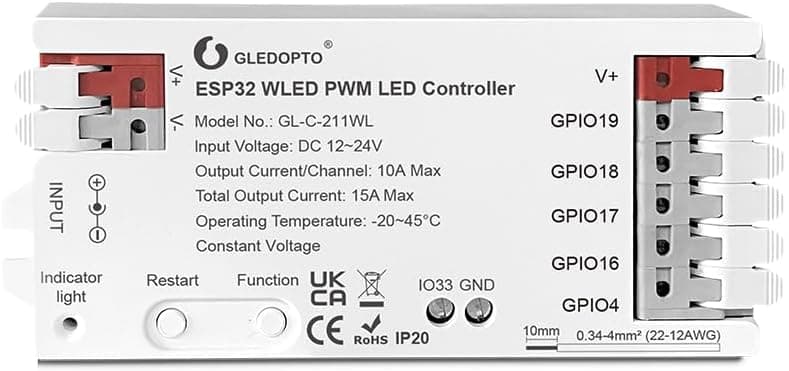
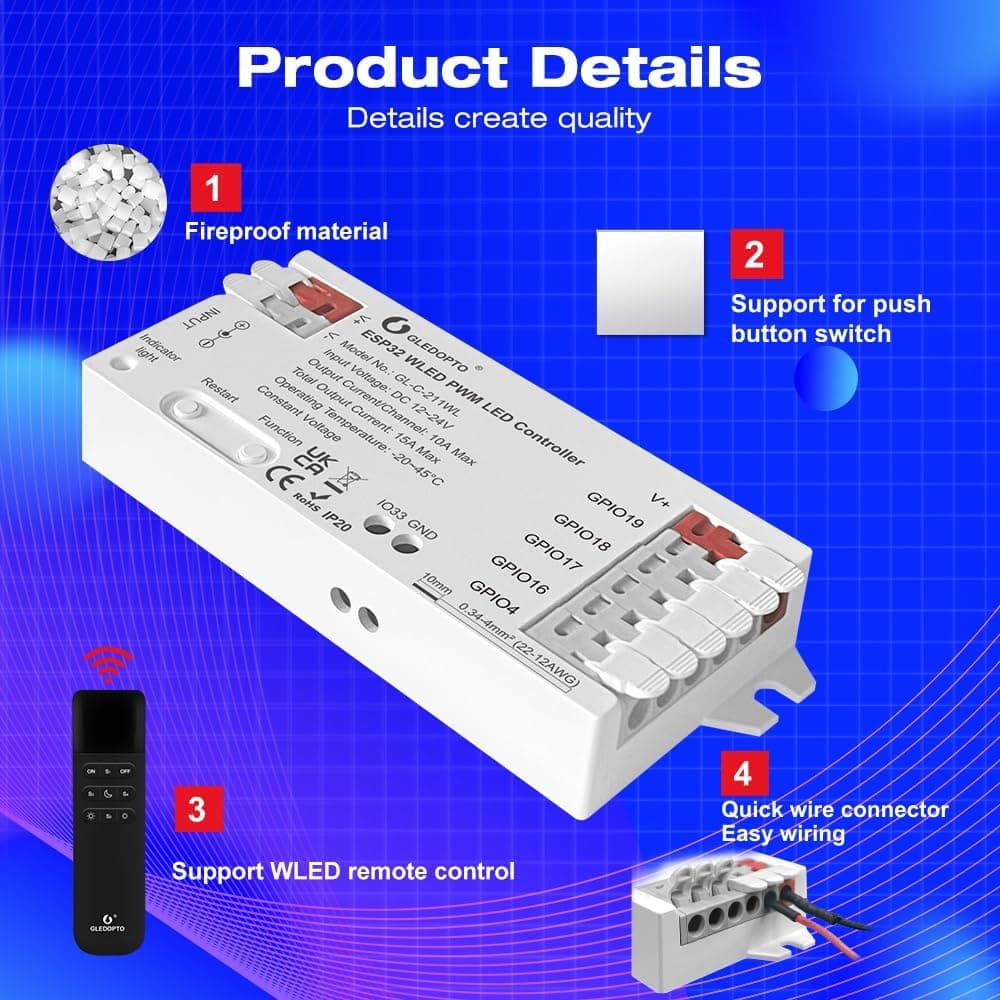
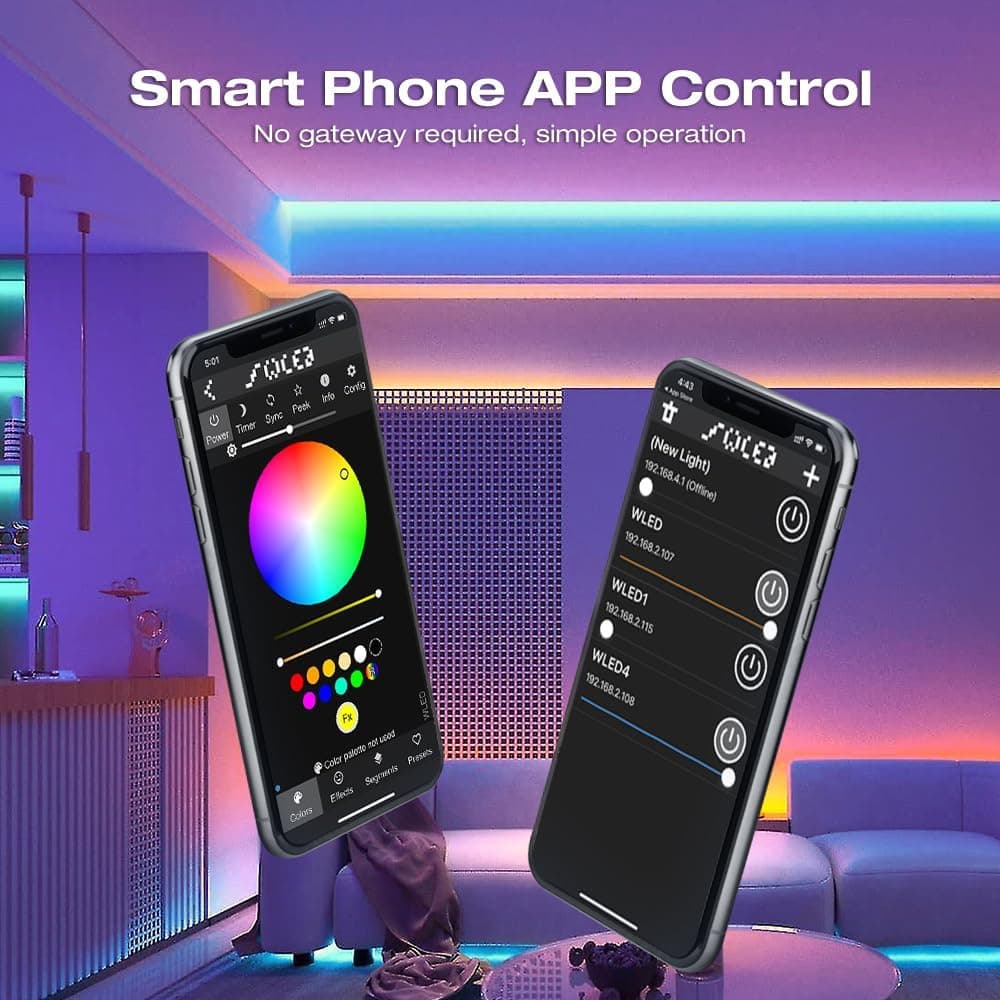
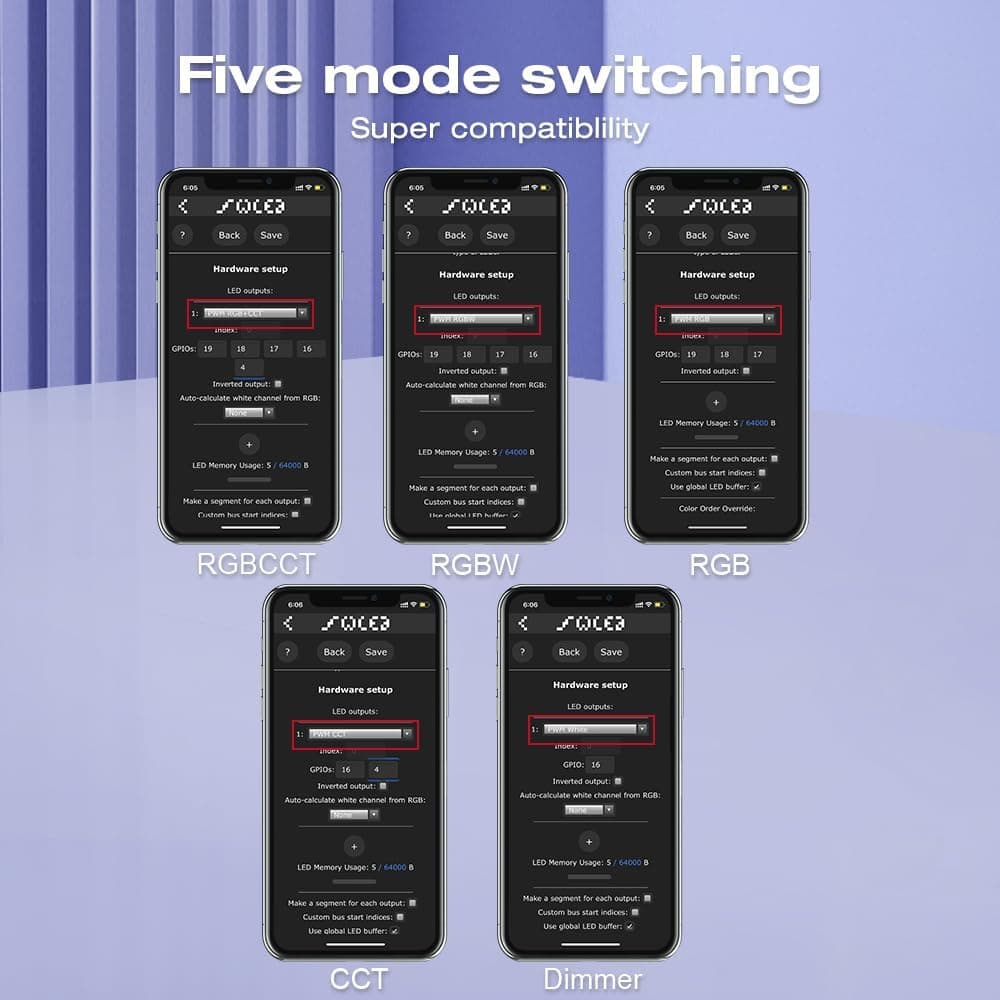
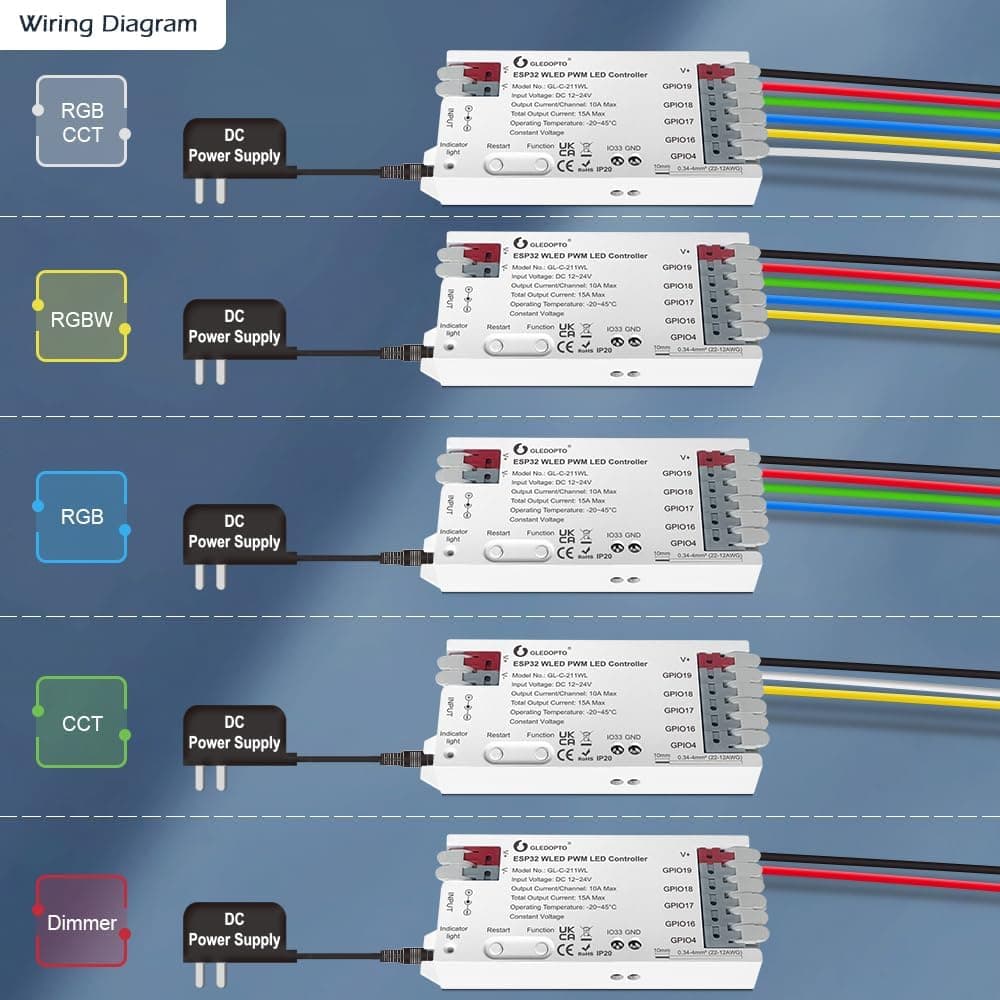
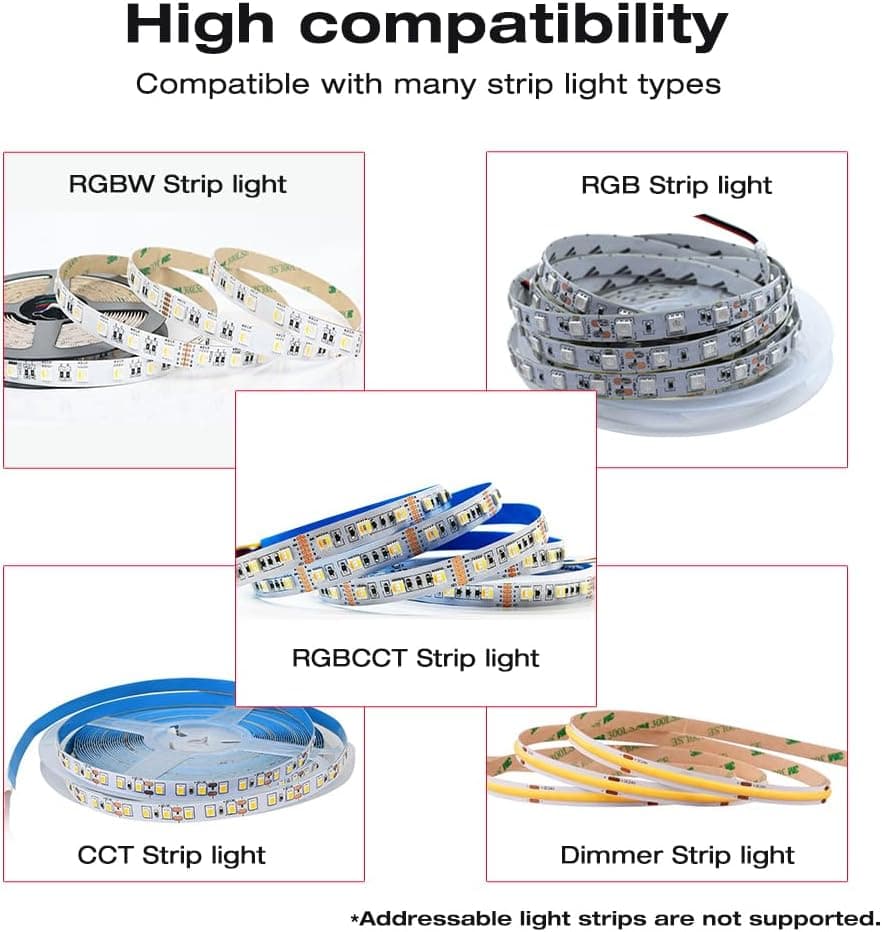
The GLEDOPTO ESP32 PWM WLED LED Controller is a WiFi-based lighting controller built around the popular ESP32 microcontroller, designed to handle five different LED strip types from a single unit: RGBCCT, RGBW, RGB, CCT, and single-color. For a mid-range price point, it aims to consolidate what would otherwise require several separate controllers into one flexible piece of hardware, controlled through a smartphone app rather than a physical remote.
Who It's For
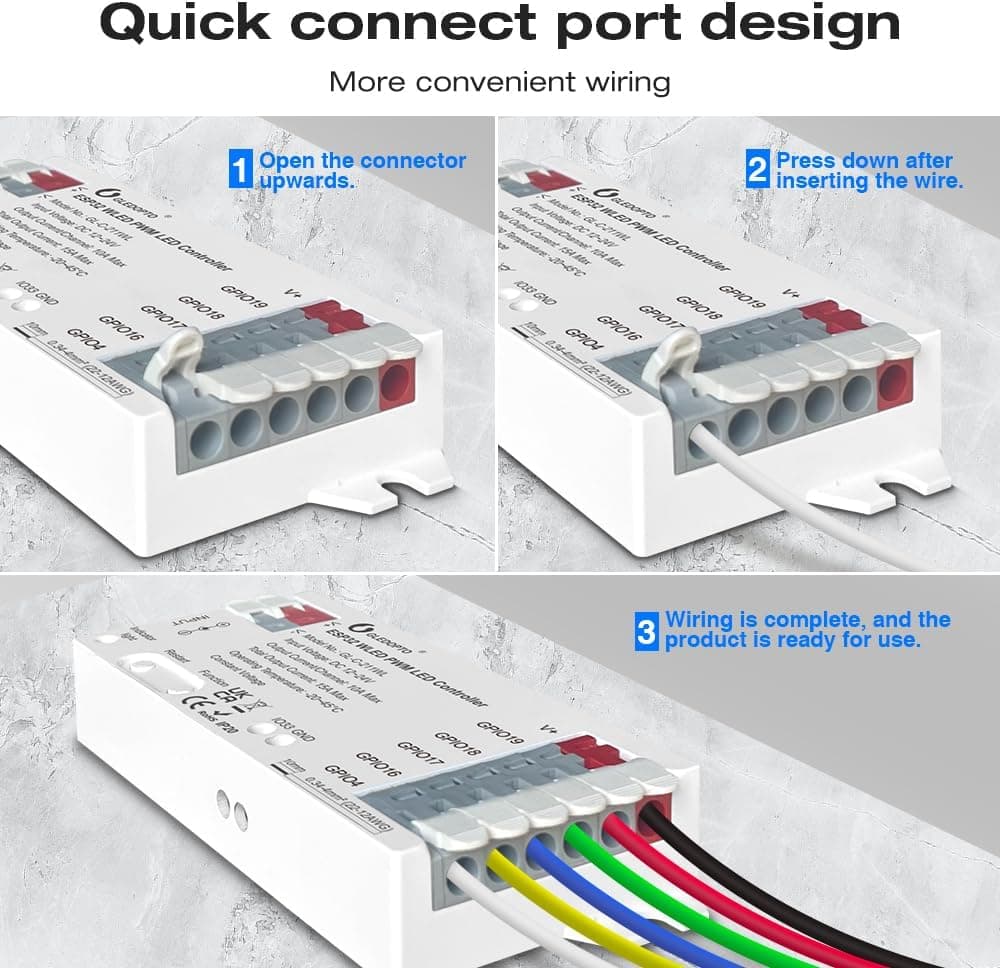
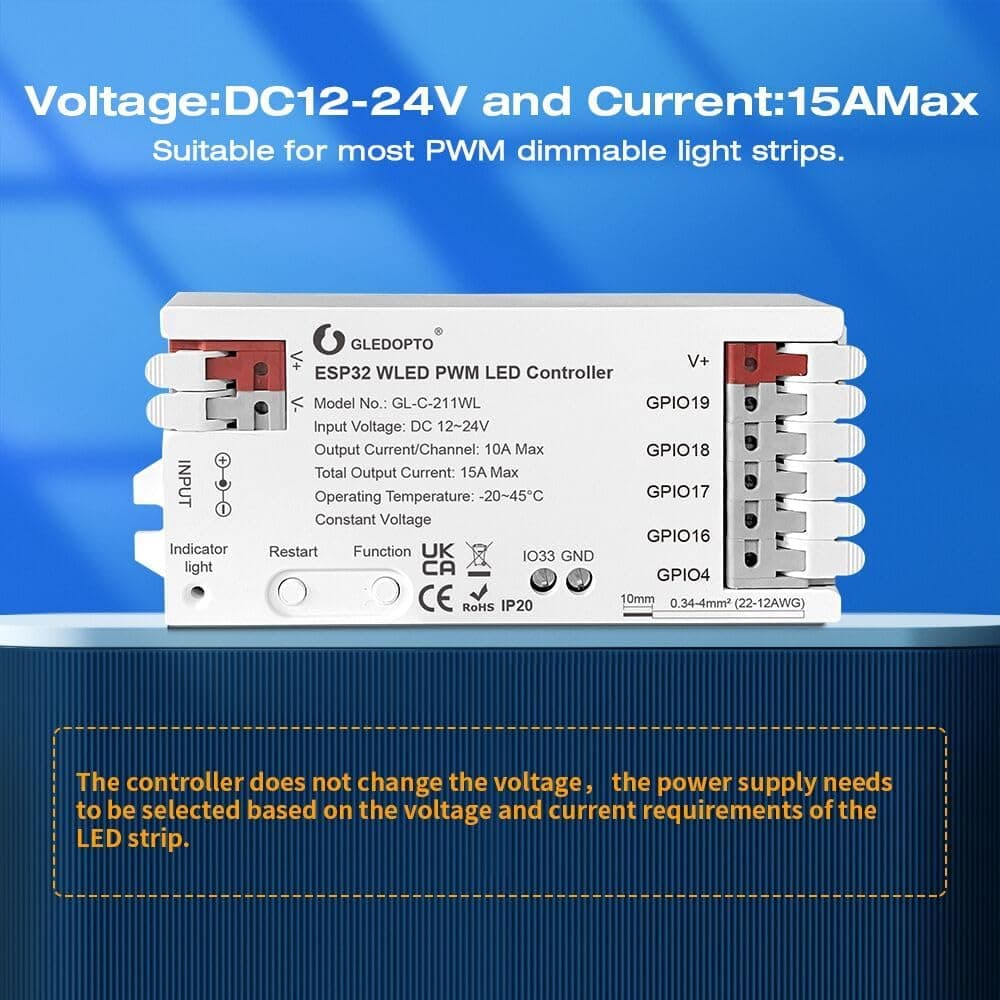
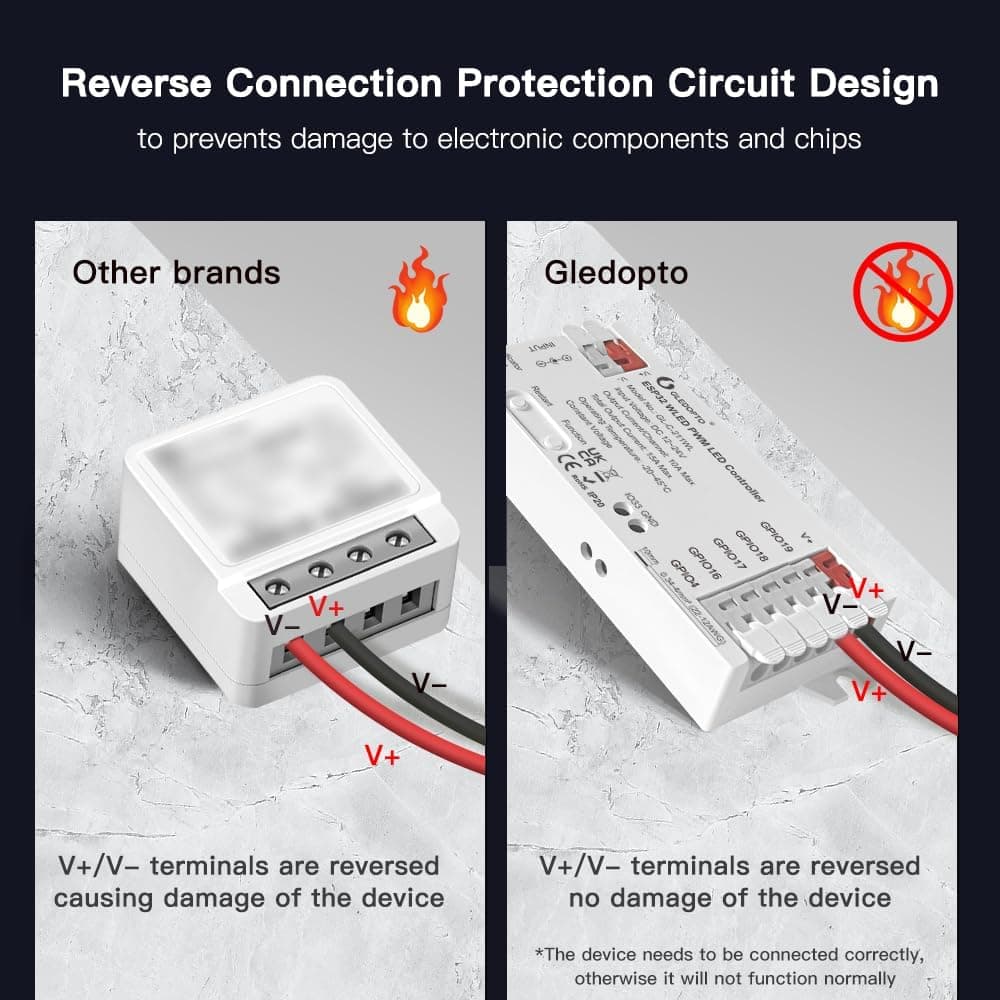
This controller suits DIY lighting enthusiasts, smart home tinkerers, and anyone setting up accent, under-cabinet, or ambient LED lighting who wants app-based control without juggling multiple controller models. Because it's built on an ESP32 chip, it's also a natural fit for people interested in flashing WLED firmware for deeper customization of effects, scheduling, and integrations. Its DC 12-24V input range and straightforward wiring terminals make it approachable for people comfortable with basic electrical connections, even if they haven't built a smart lighting setup before.
How It Compares
Compared to typical single-mode LED controllers, which usually lock you into one strip type (just RGB, or just CCT, for example), this controller's five-mode design offers more flexibility if your lighting plans might change or if you're outfitting multiple rooms with different strip types. Compared to remote-only controllers, the WiFi app control here adds convenience for scheduling and remote adjustment, though it does mean relying on a stable WiFi connection rather than a simple RF remote. For buyers specifically interested in WLED, ESP32-based controllers like this one tend to be easier to work with than non-ESP32 alternatives.
- Good for: multi-strip-type households, WLED hobbyists, DIY smart lighting projects
- Less ideal for: users who want a simple plug-and-play remote with no app or network setup
Conclusion
With a 4.6 rating from early reviewers, the GLEDOPTO ESP32 controller appears to deliver on its core promise of flexible, app-controlled LED lighting across multiple strip formats. It's a reasonable pick for anyone building out a DIY smart lighting setup who values flexibility and doesn't mind working through WiFi app setup or optional firmware customization.